
Monitoring

Pipeline Integrity Monitoring with Vibroacoustic Technology: Use Cases from Oil & Gas to CO2 and Water in Transmission Networks

Pipeline Integrity Monitoring with Vibroacoustic Technology: Use Cases from Oil & Gas to CO2 and Water in Transmission Networks
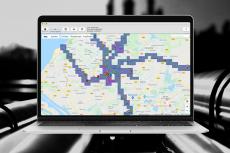
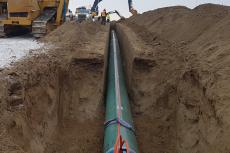
This paper presents an advanced pipeline monitoring system designed to detect and locate leaks and third-party interference (TPI) incidents across a wide variety of pipeline geometries and transported fluids. The system leverages Vibroacoustic Technology (VT), offering real-time asset monitoring and integrity assurance. Over the years, VT has been...

Making existing pipeline infrastructure more intelligent

Making existing pipeline infrastructure more intelligent
Pipeline operators are managing more complexity using infrastructure that was designed for simpler operating conditions. Decarbonization, new products and higher expectations for safety and commercial accuracy are changing how pipelines are used. In many cases, operators cannot add instrumentation or redesign assets, but smart software and advanced...

Modeling the Fracture Resistance of Line Pipe Steels for the Transport of Dense-Phase Carbon Dioxide

Modeling the Fracture Resistance of Line Pipe Steels for the Transport of Dense-Phase Carbon Dioxide
When designing pipelines for transporting CO2 in dense-phase, the complex decom-pression behavior places high demands on the material toughness. However, due to the small number of full-scale burst test results in CO2 available to date that addition-ally encompass only a narrow envelope of geometries and material properties, it is difficult to...

Unlocking Value: CMI as a Cost‑Saving Complement to IMU ILI Strain Assessments

Unlocking Value: CMI as a Cost‑Saving Complement to IMU ILI Strain Assessments
Pipeline curvature and displacement refer to the unintended movement of pipelines from their original positioning, often due to external forces such as soil erosion, seismic activity or landslides. These geo-hazards pose significant risks to the integrity and safety of pipeline systems, potentially leading to leaks, ruptures, and environmental...

Sensor Data Fusion on Small Sats and Airborne Platforms: How Next Gen Technology can help Pipeline and Asset Operators

Sensor Data Fusion on Small Sats and Airborne Platforms: How Next Gen Technology can help Pipeline and Asset Operators
Methane emissions from pipelines and other critical assets pose increasing regulatory, operational, and environmental challenges—particularly given the growing need for rapid, credible leak detection and quantification to meet global standards such as OGMP 2.0 and EU Fit-for-55. This paper introduces AIRMO’s integrated satellite and airborne sensor...

Assesing the Reliability of Rainfall-Related Geohazard Predictions: Can we truly achieve Predictive Management?

Assesing the Reliability of Rainfall-Related Geohazard Predictions: Can we truly achieve Predictive Management?
Over the past decade, CENIT has strengthened its risk-informed approach to managing pipeline geohazards, focusing on early warnings for hydrometeorological threats. With a network of 90 monitoring sensors along pipeline rights-of-way, the system provides near-real-time data on rainfall and river levels, enabling proactive responses. By integrating...

Wear Monitoring of Slurry Rubber Hoses using RFID Technology

Wear Monitoring of Slurry Rubber Hoses using RFID Technology
A novel wear monitoring concept using Radio Frequency Identification (RFID) technology has been developed for assessing the condition of slurry rubber hoses. This concept involves embedding RFID tags inside the hose liner, correlating their unique identification numbers with tag location information, and tracking the presence or absence of the tags...

ptj Young Pipeliner - Quantitative Risk Assessment of an Onshore Gas Pipeline

ptj Young Pipeliner - Quantitative Risk Assessment of an Onshore Gas Pipeline
Quantitative Risk Assessments (QRAs) are a vital tool for managing risks on the onshore gas network. They provide objective, data-driven evaluations of potential hazards, allowing operators to prioritise high-risk areas and allocate resources effectively. QRAs support regulatory compliance, inform decision-making, and help assess the impact of...

AIoT-Driven Deadleg Corrosion Monitoring: Future-Ready Asset Integrity Management

AIoT-Driven Deadleg Corrosion Monitoring: Future-Ready Asset Integrity Management
Efficient hydrocarbon transportation depends on extensive pipeline networks requiring regular inspections for safety and efficiency. Deadlegs, parts of the system prone to corrosion, pose significant challenges. Traditional manual ultrasonic testing lacks the accuracy needed for effective corrosion assessment. Permanently installed ultrasonic...

In-pipe Ultrasonic Inspections of Mud and Tailing Lines: how to manage difficult to remove Scaling, provide quality and accurate Defect Assessments of steel and HDPE
In-pipe Ultrasonic Inspections of Mud and Tailing Lines: how to manage difficult to remove Scaling, provide quality and accurate Defect Assessments of steel and HDPE
Rio Tinto Yarwun Aluminium Refinery (RTY) is expanding its pipeline integrity assessment technologies. As part of this effort, RTY has been working with Intero Integrity Services (Intero) to introduce Intero’s Pipeline Surveyor services, a free-swimming pipe inspection tool. Rio Tinto is one of the world's largest mining companies, operating in 25...
Monitoring and Anomaly Detection Approaches with AI and Data Analytics for Pipelines

Monitoring and Anomaly Detection Approaches with AI and Data Analytics for Pipelines
Effective monitoring and anomaly detection are fundamental prerequisites for safeguarding the efficiency, integrity and reliability of pipeline systems. Here, we explore both physics-based and machine-learning approaches for operational asset monitoring and anomaly detection, as well as evaluate their performance and appropriateness across a...

Toward AI Data-Driven Pipeline Monitoring Systems

Toward AI Data-Driven Pipeline Monitoring Systems
This work focuses on the application of artificial intelligence methods to enhance pipeline monitoring systems, specifically Third-Party Interference (TPI) and leak detection. A critical aspect of pipeline monitoring revolves around determining the operational state of the pipeline. This is paramount because the processing algorithms are...

The Arrival Oil and Gas Pipeline Monitoring with Satellite-Based Hyperspectral Imaging

The Arrival Oil and Gas Pipeline Monitoring with Satellite-Based Hyperspectral Imaging
Hyperspectral imagery (HSI) began in the 1980s and has been used by the U.S. government for years, but it just recently became available for commercial use. This technology has a vast range of potential applications, with oil and gas pipeline monitoring being one of the most prominent examples. HSI enables unparalleled daily global pipeline leak...

Pipeline 3D-Positioning at river crossing: Long-Range Magnetic Mapping via Unmanned Aerial System (UAS)

Pipeline 3D-Positioning at river crossing: Long-Range Magnetic Mapping via Unmanned Aerial System (UAS)
Pipeline networks traverse modern societies' national territories and can be located in areas difficult to access, such as river crossings, making maintenance logistically challenging and potentially dangerous for field personnel. In order to resolve this problem, Skipper NDT has developed an unmanned aerial system (UAS) for magnetic mapping which...

Process Analytics secures the Quality of CO2 Pipeline Management

Process Analytics secures the Quality of CO2 Pipeline Management
CO2 is a fundamental building block in the global decarbonization process. In order to successfully develop the individual processes for the separation of CO2 in the coming years, a reliable transport network, for example via pipelines, is a key issue. Here, process analytics plays an important role here to efficiently monitor and control the...